Showing posts with label favorites. Show all posts

Thursday, April 21, 2016

Droopy Drawers No More: A No-Sew Solution for Too-Big Pants On Kids


Recently saw this on super board game reviewer's TheOneTAR's Twitter* feed:

I totally relate.  We've been using this hack for almost a decade, and I took these pictures a year ago.

In honor of the awesome new Parent Hacks book, let me show you how to

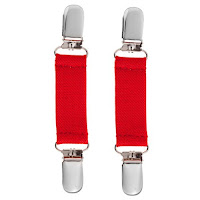
http://amzn.to/1SyFTqPTighten Loose Pants with a Mitten Clip

as referenced in hack #62- Tighten Pants with Elastic.

If you happen to have skinny kids, this might just change you life a little.

Use one mitten clip (Midwesterners- I found a bunch of these at Meijer on winter clearance). Shorter elastics work better than long ones- so go for kids' size. While mitten clips come in a million designs and colors, I have a few solid basics because they were on clearance.


Starting at the side seam on the waistband, place clip around one third of the way between the side and the back seam. Clip the other end on the pants symmetrically on the other side.

Voila. Pants that stay up! Even on skinny kids!

Remember to remove clip before laundering. The one in the picture went through the wash (see the stretching on the left side?).

What have you hacked lately?

*Be my Twitter friend? @babytoolkit 

***Baby Toolkit is the brain dump of some Midwestern parents trying to keep everyone's pants up and shoes tied on life's grand journey. While our babies grew into various sizes of kids, we're still talking about parenting and families. We also podcast about board games and communities at GreatBigTable.com. We're Amazon affiliates, so if you buy anything through our links, a small percentage of you purchase goes to our future adventures!  Many thanks for reading- and a big 5 five for reading the fine print, you're our kind of people!

Monday, April 18, 2016

10 Years in the Trenches: Parent Hacks, the book

10 YEARS.

Ranger turned 10 last year. And this blog will turn 10 in August. But it took the publication of a book to make me realize I've been a parent to young children for 10 years.

Though I helped Asha winnow down the hacks to include in the book, it wasn't until I held the final book in my hands that the story of my family using many of those hacks played out in my head.

http://amzn.to/22Hw9dg

I'm not usually sentimental. When my kids started morning out programs, preschool, and Kindergarten, I usually celebrated their new beginnings when others might mourn the closing of a chapter. Maybe that's the gift of having more kids than hands, with each stage's ending I'm often quite thankful we all survived it.

But when I flipped through this concise, lovely highlight of the ParentHacks.com blog, I felt the past-- struggles and successes-- as I remembered. With different hacks, I found myself remembering their contributors-- people like Jeremiah & Jenni from Z Recommends, Homa, AJ from Thingamababy, Anne Nahm, and Adjunct Mom.

And Asha-- ringmaster, wizard of kindness-- was always there to encourage. I remember so keenly how she said that her second baby was easier than the first. These were my colleagues, inspirations, and co-conspirators who reminded me I wasn't alone-- even if was 3:30 in the morning unable to sleep after some middle of the night chaos.

The memories- the shared revelations- the friendships. Suddenly, I saw clearly a community that encouraged and inspired.

One of the earliest hacks I remember using was Sharpie-ing my phone number on toddler Ranger's belly for an expedition to the enormous Georgia Aquarium while I was whale-like pregnant with Scout. It sounds silly now, but I don't know that I would have had the courage to go alone without that hack. And when he scampered through a crawling under-aquarium viewing tunnel swept up in a mass of preschool kids, I panicked less- because we had a safety net. We had so much fun that day, and I don't know that I've ever told anyone this- I later realized that I'd written my HOME phone number for an empty house in Indiana on his belly. But we survived without incident- and maybe that was the greatest lesson of the day.

When I got to page 210-- Uses for a Vinyl Tablecloth, I started to cry because illustrator Craighton Berman coincidentally drew my car in the hack. I don't know that the 2007 post showed enough of my car to reveal its overall shape, but to see the illustration show our car that carried my two oldest throughout their baby years just made me lose it. So mysteriously, incidentally, and curiously personal-- so much like my feelings for ParentsHacks overall.

This new Parent Hacks book is a shining beacon of 10 years of parenting creativity, compassion, discovery, and inspiration. It's like a master's class in surviving the chaos and challenges with a sense of humor, adventure, and fellowship. I am so thrilled that all the goodness is out there in a format that invites new people into the conversation. I'm also thrilled to see the conversation continue on the web site and throughout social media with the #parenthacks.

Someday, I hope to sit down for tea with Asha and find the words to thank her for the warm, friendly space she created for all of us in the trenches.

May you also find new joy, courage, and inspiration (and/or old memories) in this marvelous book.

If you want to join the conversation NOW, Asha has two virtual book tour stops on the Internet today and tomorrow:
http://www.parenthacks.com/2016/04/breaking-virtual-online.html


***Baby Toolkit is the ongoing chronicle of a Hoosier family with the good luck of great communities of friends and mentors. Adrienne did help with a very early editing of the Parent Hacks' book, but my opinions here are unprompted and uncompensated. We are Amazon affiliates, so a portion of purchases there after using are links goes to fund present and future Jones endeavors.

Thursday, June 11, 2015

The Case of the Tired Novel: On revisiting favorite childhood books

When we first had kids, I imagined our family enjoying together many of the books from my childhood.

In my grandma's basement, green-covered Nancy Drews shared a shelf with the Hardy Boys. Time-crisp dust jackets broke at the creases as if they could no longer contain the adventures of 1950s and '60s kids' pulp. The Bobbsey Twins cheerfully solved crimes while hero dogs saved hapless humans time and time again. I don't think there was any book considered a classic on those shelves. My brother and I read them at every opportunity. They may not have been Choose-Your-Own-Adventures, but I marveled at sixteen-year-old Nancy's blue roadster, keen eye and seemingly limitless freedom.

At my small country grade school, the classics stood shoulder-to-shoulder waiting to fill any unoccupied student minute. Twain and Dickens were some of my favorites. These school's books also came from the years preceding mass market paperbacks.

Books seemed ageless. Of course I felt the distance of the years when reading, but the stories still breathed.

Even after weeding out the obvious twaddle, many books I loved did not stand up to the years when I tried to read them with our kids. And a few that they do like, I now actively dislike.

At present, the kids are obsessed with Encyclopedia Brown audiobooks. We listen to them in the car, the kids rapt in the riddles while Jim and I quietly snark about Idaville being the worst town in America. Despite a high case closure rate, crime is unusually high in Idaville. A known public menace is allowed to keep creating problems with no real consequences. Gambling and theft are high. People hide out from thugs. And worst of all, the police chief relies on his child to solve the crimes.

Often the cases are solved by details that are circumstantial at best. When Encyclopedia "proves" Bugs Meany is cheating a younger boy, Encyclopedia declares a letter and check forgeries because they are dated July 31st. While this may have been grand detective work in my childhood perception, an erroneously dated check now seems less like a smoking gun and more like a common paperwork error.

While social changes may make these old books seem outmoded, I'm becoming convinced that the literature of my childhood was inferior. It may have been the literary equivalent of the buddy parent: pandering and lacking complexity.

When I listen to Encyclopedia Brown with my kids, the books operate on a surface level. The heroes don't fear anything, and there's no moral complexity. Encyclopedia pronounces a verdict that everyone accepts no matter how thin the premise. The stories have all the depth and emotional authenticity of a Scooby-Doo episode.

That approach may have been enough when I was a kid, but there are so many better offerings today. I am convinced that children's literature has improved. It respects the young reader with complexity and depth in the stories and their emotions.

As a parent, I really appreciate this shift. I remember reading stories to try and understand the world around me- particularly the parts that adults didn't discuss. When the stories were preachy, prescriptive cautionary tales, they become predictable, relatively worthless and most offensively, not fun.

Accepting the limitations of my childhood favorites allows us to discover together the rich, new world of children's stories. Every parent who once loved Encyclopedia Brown should take the opportunity to Escape from Mr. Lemoncello's Library alongside their kids.

This BAD summer, we'll discuss some of our other new and old family favorites.


Have you revisited your favorites?
How have your favorite books aged?


***Baby Toolkit is a tale told by a Midwestern gaming family, full of books and adventures, signifying something. We just don't know what. We are Amazon affiliates, so a small portion of purchases made through our links goes to pay for our domain name and general upkeep. Be sure to check out our gaming podcast at GreatBigTable.com.

Monday, June 01, 2015

Our BAD summer begins!

https://www.loc.gov/poetry/180/133.html

This rainy leftover-cake-for-breakfast morning* is the dawn of the kids' and I's summer together.

Our chaos-strewn house already looks like it was invaded by warring troops of toy and paper hoarding monkeys. We have a lot of work to make it a mere shambles again.

I couldn't be more excited. This summer holds so much potential, so much opportunity.

The kids and I decided to go for a BAD summer this year: book a day. We're going to try to read at least one book together every day. Rogue is four and Scout is a new reader, so we're setting our goal of one a day in the field of picture books. We're also planning on reading longer books aloud together throughout the week. Ranger and I will each be reading books at least 15 minutes a day every day.

Jim and I started reading chapter books aloud with the kids some evenings at dinner. There is magic in sharing the experience of books like Elise Broach's great beetle adventure Masterpiece and Doreen Cronin's retired rescue dog J.J. Tully mysteries The Trouble With Chickens, The Legend of Diamond Lil, and The Chicken Squad. As I looked up these titles, I found that both Broach and Cronin have extended these wonderful series with new titles. The kids ran into to look and we called Jim at work to tell him. The books are that good.


This summer we plan to cook, play, game, be creative, visit friends, make our home welcoming for visitors, laugh, dance, game, dream, listen to music, crack jokes,explore, learn, blow bubbles, share, help where we can, be part of our neighborhood and community, picnic, and recharge our souls.

Ranger and I will both be writing about the BAD books we find notable. I'm so excited that he's about to start writing here.


What should we be reading and doing?
What things are you planning?

May your summer be a wonderful adventure, friends!


*Even with leftover lemon cake available, the girls chose Cheerios. Ranger on the other hand, stumbled out of his room asking about the cake.

**Baby Toolkit is the ongoing story of a Midwestern family on the adventure that is life. We are astronauts on spaceship Earth taking in the vast wonder of the universe. We are also Amazon affiliates, so if you purchase after clicking through our links, a tiny bit of the proceeds become resources for future Jones endeavors. Check out our board game podcast at GreatBigTable.com.

Saturday, September 20, 2014

Hairband Carabiner 2.0: A Hack and a Hitch

I've been a Parent Hacks fan since early days. Way back in 2009, when Asha posted about storing hairbands on a carabiner, my only daughter was mostly bald, but already a rabid anti-hair accessory activist. The only efficient place for our hairbands was in the donate box.

A few years and a second girl later, I'm now corralling two sizes of ponytail holders.

A local friend reminded me of this hack. Apparently her daughter had hair in 2009. The hack worked well in holding the bands, but not in sorting them.

Without really long hair, my kids need two bands each for ponytails. Though I have unintentionally left the house wearing one neon green sneaker and one white one, my daughters are a bit more particular about things matching.

I didn't like wrestling the bands around on a scavenger hunt for identical pairs.

So, some of the bands got hitched.

Please excuse the photo quality. These are the fastest pictures I could get, not the best.

1. Do I know you? You look so familiar.
2. Hanging Out Together.
3. Twister?
4. What a cute couple!
5. Finding community.
For simplicity's sake, I keep the two sizes on separate carabiners. One ring for each kid makes morning prep simpler at home and traveling.

A second ponytail holder can be hooked into a singleton already on the ring. It's pretty easy to reunite recently rediscovered bands.

Happy hacking, friends!

***Baby Toolkit is the product of a geek marriage in the middle Midwest. We have also produced three children who cannot under any circumstances agree upon the same meal. We have a periodic podcast about board games and the groups they inspire at GreatBigTable.com. Our opinions are our own, are organically grown if you don't count the radiation from space, and are harvested irregularly at odd intervals. We are Amazon affiliates, but aren't sure about the future of that relationship. If you buy stuff through those links, we make a small percentage that we'll squander on domain names or internet connectivity. Thanks!

Thursday, June 12, 2014

Halcyon Nights: W. C. Handy Blues Festival

Davina and the Vagabonds bringing down the house. photo credit, WC Handy Blues Festival @HandyBluesCrew
Yesterday evening, when Jim and Ranger got home, I woke up our napping girls and pushed everyone out the door.

The rainy, cloudy day was clearing, turning into a perfect night for sitting in a park on a blanket watching the sun set and the moon rise.

After a short drive to Henderson, Kentucky, we arrived at the W. C. Handy Blues & Barbecue Festival at the city's waterfront Audubon Mill Park.

Even in the parking lot, my reluctant crew started dancing to the irresistible magic of Davina and The Vagabonds. The potent energy of live (wailing) music and early summer evenings caught us all immediately and held us long past normal bedtimes.

I'm not able to write anything about Davina and the Vagabonds that successfully captures the energy and brilliance of their performance and music. Please listen to her newest album, especially Flow, which I hope my kids will love as much as I do.


John Nemeth & the Bo-Keys, photo: W.C. Handy Blues Festival

We're really lucky to live near one of the best blues gatherings in the nation. The only thing more astounding than the line-up and the gorgeous setting is the festival's deep community commitment. The Handy festival is totally free and open to all.

Davina and the Vagabonds yielded the stage to John Nemeth and the Bo-Keys with Percy Wiggins who carried the evening's allure into enchantment with new roots music like "If It Ain't Broke, Don't Fix It."

Barges on the river slowed their pace to listen longer and periodically raised their horns to greet the crowds. Fireflies and children danced as sunset turned to twilight to moon glow.

Cool breezes from the river carried the music to the splash park fountains.

It was a gorgeous night. A night to remember, and a night to repeat.

What opportunities will you seize this summer?


 *** Baby Toolkit is the sporadic story of a couple geeky Midwesterners and their kids. Though we benefit every year from the miracle that is the WC Handy Blues & Barbecue Festival, we have no fiscal relationship with them that they don't offer freely to everyone else. We're Amazon affiliates, so if you purchase through our Amazon links, a small portion goes to us and pays our domain fees every year (thanks!).

Tuesday, May 27, 2014

Gen Con meets Indy: No Time Machine Necessary at Conner Prairie

photo: Conner Prairie, all rights reserved
Every Gen Con, Jim and I work on a mental list of Indianapolis opportunities we wish more Gen Con attendees were aware of. Now, we're not so naive to assume that anyone wants to take a gaming break during Gen Con, but if you're coming in early, or staying late, you might want to take a few side trips before you leave the Circle City and the Hoosier State.

It's a mystery to me why no game company (especially Mayfair) has ever capitalized on nearby interactive history park Conner Prairie. I don't know why steampunks aren't booking every Gen Con weekend flight of the 1859 Hot-Air Balloon Voyage for the photo opportunities alone.

Unlike the musty assemblages of ramshackle relics with "a butter churn for the kids," Conner Prairie is a through-the-looking-glass historical experience.

This sprawling park works to reincarnate periods of Indiana history from a Lenape Indian Camp to an 1836 Prairietown to the 1823 Conner homestead to1863 Civil War journey. Despite a wealth of great buildings and interactive exercises, Conner Prairie's biggest selling point is, hands-down, the commitment of the interpreters. Unlike most historical site guides, these hard-core reenactors are immersed in the period they are portraying. They deny any reality beyond their character's "present day."
an

One of my friend's fathers, a history buff, spends his entire visit trying to get the interpreters to discuss things outside of their period. He asks about presidents yet to be elected, inventions not yet popularized, and politics not yet transpired. To his conjoined delight and frustration, it is like getting a Buckingham Palace guard to smile, not impossible, but remarkably difficult.

This commitment to the period's atmosphere breathes life and magic into the expedition.

Conner Prairie is also, like actual history, a dangerous place. The candle maker works, in part, over an open fire, as do the visitors who assist. At the trading post, there is a hatchet throwing competition open to visitors. Safe practices are mandated by staff, but the elements and approaches are refreshingly real.

Conner Prairie shares the story of westward expansion and nation-building. Some of the interpreters (like the blacksmith and the soldiers) are quite conversant in arms-making and munitions. The attention to historical accuracy in costuming will also impress. For the Catan crowd, Conner Prairie includes sheep, wood, wheat (grain), brick, and ore.

Conner Prairie abounds with photo opportunities for cosplay, but the true gem is the 1859 Balloon Voyage. This replica airship offers tethered trips into the skies of the Circle City (reservations required). I cannot imagine a better steampunk portrait location.

This is the first in a series of posts about Indianapolis sites relating to Gen Con.

***Baby Toolkit is the opinionated discourse of some Midwestern geek, gamer parents. We have no fiscal relationship with Conner Prairie. We also podcast about board games at Great Big Table.

Saturday, November 30, 2013

All In: Cribbage Club and Phone Calls

At a movie yesterday, my friend teased her high-school aged niece that "I will cut you" if she checked her phone throughout the movie.

My movie-buff friend is perpetually amazed that the next generation of her family cannot be separated from their phones for even the duration of a movie.

"But what if one of my friends dies?" her niece joked.

I thought of those calls that, with luck, don't come until much later in life. "Then you definitely want to turn off your phone, and just be here. Bad news travels fast enough."

When I got home from the movie, Ranger met me at the top of the stairs with the phone.

"It's Aunt Gayle." His aunts are mostly family we have chosen. As Jim and I each have one brother, our family tree holds only one aunt for them.

The aunt on the phone has been my friend for nearly 30 years. In her voice, I heard a careful control, and before she speaks I know something has happened.

When I was pregnant with Ranger, Gayle's geography career found itself in a cul-de-sac. She returned to college. A Wednesday afternoon gap in her course schedule somehow transformed into Cribbage Club.

Wednesday afternoons, Gayle's apartment filled with the alluring scents of home-cooking as we all gathered round the kitchen table for cards.

Fred and Moe both learned cribbage in the military long before Gayle and I were born. Fred, a loud-talking former postmaster and Gayle's brother-in-law, learned to play in the Army. Gayle's Uncle Moe learned to play in the Air Force and sometimes brought his cribbage board made from part of a cockpit dome.

I was equally thrilled to be able to play cribbage regularly. My dad and Jim's family all love the game, and I quickly fell under its spell. Locally, playing cards usually means Euchre (dubbed Indiana's game), Clabber (a regional 4-handed variation on an old German duo game), or even Bridge. Cribbage opportunities rarely come along.

After lunch, working in noisy teams, we raced our pegs along the paths while telling stories and mercilessly teasing each other. When we took breaks, Moe and Fred would retire to the porch for cigars while Gayle and I served up ice cream in the kitchen.

Moe and Gayle visited us in the hospital when Ranger was born even though they could only wave to him through the NICU window. Cribbage Club continued, baby Ranger would usually nap or sit on someone's lap while we played. Months and seasons passed until Ranger was big enough to start grabbing the cards from the table, Aunt Gayle reached the homestretch of her degree and started an internship that quickly became her next career. Summer had arrived, so the boys (men who retired around the time Gayle and I first graduated from college) were eager to return to their gardens and golf courses.

We periodically played in the evenings or at Gayle's family gatherings. The cigars disappeared from the routine when Fred lost half a lung to cancer. He recovered well and was soon back on the golf course and working in the yard. We didn't see his heart attack coming, and it felled him instantly and completely.

At Fred's funeral, I sat with Uncle Moe and we made jokes about how Fred had gotten both Gayle and I to wear skirts while the red rims of Moe's watery blue eyes hinted at the physical pain of grief. Maybe it was because he was the oldest of our group or maybe it was a reminder of his son lost in infancy, Moe's sadness seemed larger and stronger than the broad Ohio River he crossed every time we gathered together. Baby Rogue sat on his lap as we both wiped tears from our eyes and talked about the best times.

Over the phone I heard Gayle say "Uncle Moe died at home yesterday." Thanksgiving Day. We went through the details, and I promised to call her back.

Though we all had cell phones, I do not ever remember one on the table while we played. Any calls during Cribbage Club were ignored, slightly mocked, or actual emergencies. When we played, told stories, and joked around, for Cribbage Club we were, in the parlance of poker, "all in." And as a result, we all won.

In honor of Uncle Moe this holiday season, please remember to ignore your phones and be wherever you are.

***Baby Toolkit started as a baby gear blog in 2006. Despite a notable lack of babies and a directly correlative waning interest in baby gear, Jim and I keep writing about our lives as geeks, parents, and citizens of the world. For what it's worth, we're Amazon affiliates, though any Amazon links in this post remembering a dear friend would be crass and sort of bonkers. Yet upon writing this, I do think Uncle Moe would find it funny (so here's to you, Moe!). Hold your dear ones close and your technology in cabinets.

Friday, June 28, 2013

Cutting Costs (and Hair): Wahl Lithium Ion Clippers

As a household, we've been cost-conscious for a long time. That means many of those "50 Easy Ways to Save Money" articles just don't apply to our lifestyle. Our latte factor really never came into existence, though I have spent my fair share on ice cream products.

Here's one of our best tips for saving money, and it's much easier than it sounds. I'm not suggesting anyone make their own artisanal cheese for savings or raise truffle pigs for extra income. This is more along the lines of trimming a hedge (without the heat and bugs) or hanging a picture.

I give my family haircuts. Just Jim and Ranger, but even two people can add up to substantial savings in a family's annual budget.

Our Hair Cutting Backstory
Jim and I were newly married, still in college and struggling to make ends meet when my parents gave us our first set of hair clippers. Jim was looking rather shaggy at the time because we were choosing food and shelter over haircuts.

My mom has always cut my dad's hair, and my dad cut my brother's and mine while we were growing up. I didn't have a bowl cut exactly. It was a bowl with bangs; it was like I was trying to impersonate a Playmobil child. My brother's haircuts were slightly longer than military-issued, but he wears his hair that way again (and it suits him). For the record, my brother's last "professional" haircut was given to him by the Air Force in the mid-1990s. He cuts his own hair, and it looks great. So great, in fact, that his friends often get him to cut theirs as well because his talent in drawing translates into true style (think modern superhero).

Unlike my brother, my drawing is functional at best. I do okay at Pictionary, but even with hours of drawing time, I can't produce a recognizable person- much less one that wouldn't insult its model.

My only previous experience cutting hair was when my college friend asked me to trim her bangs. My nervousness and repeat attempts to "even things up" left her with a horribly short, off-kilter fringe most suitable for a youth in the 1964 film Children of the Damned. Not yet in my twenties, I swore off the life tonsorial.

Jim's a brave guy with fast growing hair and a notable aversion to styling-chair small talk. Like a surprising number of men, I think he would seriously consider getting a friar's tonsure if the barber had taken a vow of silence. Maybe this haircut has always been more tolerable than obligatory chit-chat.

When Jim tells other men that I cut his hair, almost every one responds with an envious statement wishing their significant others were willing to cut their hair.

I had to entice Ranger away from the kid's barber shop with video games and race car seats, but found that I could easily buy his haircut opportunity with a) video game time or b) considerably less cash than a professional haircut.

The Savings: Time and Money
Even at a bargain $15 cut quarterly for two people, that comes out to $120 a year. When things aren't completely off the hook at our house, I cut their hair bimonthly or monthly which comes out to $180 to $360 annually.

If someone needs a haircut for a special occasion, I only need to clear a half hour of time (which is less time than I spend in the kid salon's sticky waiting area trying to keep my toddler from her ongoing quest to create a superbug).

My "Training"
I watched the instructional VCR tape that came with the clippers and read my dad's copy of Haircutting the Professional [Playmobil] Way by Bruno (whose single name seems only to be a protective measure against the angry children of adherents). Then, with an advance apology, I cut Jim's hair. I was pretty sure he'd be as devastated by my work as my micro-fringed friend and would soon be investing in pony tail holders.

But that first haircut was not awful. Jim didn't look like a member of the cast of Children of the Corn, a military unit or a leather-clad hate group. It wasn't a great hair cut, but he had paid for worse professional cuts.

Over the years, the quality has improved (though some cuts have shown my learning curve more than others). Jim consistently gets compliments on his hair cuts.

While you can always borrow my VCR tape, Wahl now offers a how-to website with expanded information about contemporary hair cuts. I do wish they would feature more styles for women as families who buy their clippers are likely to be interested in longer styles, layering and women's bangs styles.

The convenience of home hair cuts has me eyeing the girl's curly locks and even my own wavy mop for further savings. I've been spending more time on YouTube watching people cut hair than your average bookish geek.

The Tools
Our first set of clippers, a Wahl home haircut set, are still in lovely working order after almost two decades of use. We diligently clean and oil the blades before storing, so they have years more use in them.

Recently, Wahl offered me an opportunity to try their new Lithium Ion Clipper. I jumped at the chance. It only takes one home haircut to realize that the cord is an obstacle while cutting. Yet I didn't want to venture $69.99 to find out if the battery could offer enough power to keep those blades flying along for clean cuts.

The Wahl Lithium Ion Clipper cuts beautifully and holds a charge through multiple haircuts and months of storage. Not having a cord speeds up the hair cut as I can easily walk in a circle around the person without worrying about catching them (or myself) in the cord.

These cordless clippers open up new haircut locations. I just cut Jim's hair on the porch of my parents' vacation rental along the inland shore. I've cut Ranger's hair in a hotel bathroom before a large family gathering. Admittedly, this setting made me feel a little like the parents in Running On Empty, but he looked good in the group photos.

Because of past experience with cordless shavers, I feared that the clipper battery might putter out mid-cut. As no one in my family would find a partial cut too amusing (on themselves, at least), I was thrilled to see that I could run the clippers on power using the charger input (which is designed with a long enough cord to accommodate AC-powered cutting).

The Recommendation
The Wahl Lithium Ion Clipper's cordless use makes it a lot easier to cut my family's hair. If I were buying a new set of clippers, especially as a beginner, it would be my first choice. The Lithium Ion set includes everything I need to cut Jim and Ranger's hair in a broad array of styles.


Some of the most used tools in our hair cut kit are the slim haircutting scissors and stylist's comb. With both Jim and Ranger, I hand crown of their hair and use clippers on the sides and back. The included sheers are sharp and straight, and the fine-toothed comb offers more precision and better perspective than any of our regular combs.

The ear guides (both the traditional left/right set and the newer dual side ear guard) simplify the hardest region of traditional hair cutting.

Great extras like the eyebrow trimming guard offer easy solutions for old problems. Before, an eyebrow trim required a steady hand to hold a comb at just the right distance while operating the clippers with the other hand. It was pretty awkward on someone else- and ridiculously unwieldy on oneself (so I've heard). A momentary loss of balance by either hand can reduce portions of a brow to short stubble (or so I've heard). The new guards make this pretty much goof-proof.

Our Wahl Lithium Ion set even included a small trimmer for brows, beards, and other touch-ups. It's lighter-weight than the full clipper, so it's easier to manipulate for interim touch-ups.

The Wahl set also includes a cutting cape. While this cape is functional, we don't like it as much as the rest of the set. If you're going to cut hair with regularity, it's worth taking the plunge on a nylon hair cutting cape with snap closures. We have one that fits children and adults. The clipped hair slides off the nylon more easily because it lays flatter than the vinyl cape. There aren't as many places where the hair can gather. It is preferable that the clippings end up on the floor. Otherwise, they can end up everywhere in the house. And should the clippings get down someone's collar, they itch enough that even a grown person will have a hard time sitting still.

...as for kids sitting still
Steal a play from the race car seat salon and let the kids watch something on an elevated screen (keeps their chins up) or play a video game (also on an elevated screen if possible, though I have been known to offer a DS in a plastic bag on occasion). As Ranger gets older, I don't always need these enticements, but I do find myself endlessly repeating "head up" and "chin up." Like most people who spent time with kids, I've come to accept an shocking level of repetition in discourse and activities.

Have you ever cut your family's hair? If so, what tips and techniques help you? If not, what are your concerns?

***Baby Toolkit is the tale of a Midwestern family written by some geeky parents. We received a free Wahl Lithium Ion Clipper set from their representatives, but our opinions are entirely our own and freely given. We are Amazon associates, so any purchases made through our links help pay our operating costs (thanks!). We also podcast about family and community board gaming at GreatBigTable.com.

Thursday, December 13, 2012

Blasts from the Past: Three Favorite Hacks from the Days of Yore

In the past few months, I've found myself periodically looking through the archives to answer friends' questions. I've stumbled into old hacks which long ago turned into nearly-invisible standard family operating procedures.

So, for the subscribers who haven't been around for all six years, here are three of our all-time favorite hacks.

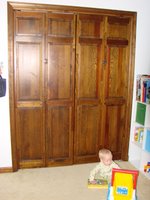
Babyproofing: Hacking a Wooden Bi-fold Door

While not my first post, this hack is the one that made me feel a part of a larger conversation. My jubilation when Asha covered it on Parent Hacks still resonates. It's also a cheap, clean-looking preventative for pinched fingers. Our latches are still going strong six years later.

The Big Muddy: Keeping Stroller Gunk Out of Car Upholstery 

Earlier this year I replaced this Thanksgiving tablecloth after years of use. I only wish the rest of the car had weathered those last five years as well as the cargo area.

Holiday Hack: Toddler-Friendly Ornaments

The kids still love doing this, and it means far less stuff to pack away after the holidays. I suspect Ranger will add some LEGO creations to the upper branches this year.

Thanks for strolling down memory lane with me, and thank you for reading Baby Toolkit!

***Baby Toolkit is a half dozen years' worth of hacks and conversation written by a couple geeky Midwesterners. Thank you for reading us! We're Amazon affiliates, so a small percentage of purchases through our Amazon links goes to help our operating costs online and in the real world. We also podcast about board games at Great Big Table.

Tuesday, December 11, 2012

Recommended Reading: Some Favorites from 2012*

Should a genie offer me a bonus hour for every day, I would make lots of plans and promises for that time. And then I will spend it reading. Actually, I wouldn't because literature clearly teaches never to trust genies.

I love books and stories. My Twitter feed is usually peppered with current reads, new recommendations from friends, and other book talk. I neglect Pinterest and totally abandoned Facebook, but I usually read my daily notifications from Goodreads.

While I have tried to limit my bookish chatter to kids' books and relevant parenting titles, sometimes I can't restrain myself.

So, please forgive me as I shoehorn in a few favorite reads from this year under the guise of holiday shopping.

The Book My Dad and I Agree On:
Don't Ever Get Old by Daniel Friedman
Buck Schatz, a former police detective, goes on the hunt for a Nazi war criminal. Buck has personal reasons to bring the man to justice, but others are searching for the fugitive's rumored fortune in gold. Did I mention that both men are now octogenarians?

Buck's cutting and unvarnished opinions (which he considers the privilege of old age) made my septuagenarian dad laugh so hard that my brother immediately read the book. Then he called me and insisted that I read it too.

We are all waiting for Friedman's next release.

The Book I Immediately Bought My Brother (After Reading a Library Copy):
The Sisters Brothers by Patrick deWitt
A Western noir. Modern sensibilities, sibling conflict and affinity, and dialogue so bewitching that I wanted to every word of it aloud to bystanders.

Talented assassins Eli and Charlie Sisters pursue an intended victim to remote Western outposts. After a strange night in a mostly abandoned cabin, Eli starts considering their future.

Shortlisted for the Booker Prize.

The Book I Stole from Jim's To-Read Pile -or-
The Best Dystopian Novel Explaining the Eighties Geek Zeitgeist:
Ready Player One by Ernest Cline
If you can remember being really excited about getting an Apple II to display your name or you ever programmed onto an audio cassette, this book will speak to you. I have long thought that the young geeks and gamers of the eighties were conferred a special blessing by history.

This novel about our nation gone wrong (via global warming, hyper-commercialization, and other present-day headlines) offers insight into that strange decade and those who came of age during it. While it's a great dystopian novel for any geek, Eighties geeks may find it as generation-affirming as the Goonies was back in 1985.

The Quirky Book I Made Everyone Read
The Family Fang by Kevin Wilson
The Fangs specialize in family drama. Years of creating awkward scenes as spontaneous performance art have left the siblings known to the world as Child A and Child B with some serious emotional baggage.

Annie, now famous for her acting (and some unfortunate internet memes) and Buster, an entertainment journalist specializing in thrill-seeking exploits, avoid their parents at all costs. Until Buster finds himself injured and unemployed and Annie's career publicly implodes. Then their parents vanish leaving behind only a bloody van at an out-of-state rest park.

The Book That Carried Me Away
The Night Circus by Erin Morgenstern
Make sure everyone is well fed before you crack the covers of this one.

A grudge-match competition between two aging magicians results in a circus unlike any other.


My Geeky Beach Read Recommendation
The Princess Bride by William Goldman
One of my dearest friends asked me for a book to read while on the beach in Jamaica. She didn't really get into reading until Harry Potter, so I sent her back to this wonderful book behind the wonderful film of the same title.

Even if you have seen the movie a million times, the book is not to be missed.

My Favorite Geek Love Story
Bellwether by Connie Willis
Sheep and the slings and arrows of corporate culture. The wry humor in this slim little novel just captured my heart entirely.

A trend-hunter working in an ever-expanding bureaucracy tries to find out why women bobbed their hair.

Short Stories with Strange Sensibilities
Sorry Please Thank You by Charles Yu
Delightfully unexpected stories that I just wanted to savor. Even though I read the book month ago, just this weekend Jim practically shouted "I'm reading that now," when I flipped open a library copy he checked out (and left on the kitchen table- I argue that makes it fair game).

The collection opens with a call center in the developing world that outsources pain and grief. It wanders through the Star Trek universe with a recently promoted redshirt in "Yeoman" (everyone who has seen Trek must read this). The 2-person skeleton shift in a big box store find a finger in the aisle, and then the zombie who dropped it. And (I promise I won't mention all of the stories individually) in "Troubleshooting"is so wonderfully mind-bending that it reminds me of the movie Primer.

And Not to Get Lost in a World of Fiction
Nothing to Envy: Ordinary Lives in North Korea by Barbara Demick
Want to know what life is like after electricity? This startling book looks at what happens when the lights truly go out.

Through interviews with North Korean refugees and expatriots, Barbara Demick draws a gripping presentation of a hidden nation and the people struggling to live in it.

This non-fiction work by LA Times' Beijing bureau chief made me recognize so many of my own cherished assumptions I have about modern life. This book tugs at the same psychological knots as zombies and futuristic dystopias.

There are so many more titles I could mention (don't even get me started about zombies), but I'm stopping now.

What great books are you reading?
Should I post more often about books like these- or just keep it on Goodreads?

*It took a lot of restraint not to title this post, "I like big books and I cannot lie."

***Baby Toolkit is a bootstrap blog written by Midwestern geek parents (between books, boo-boos and bedtimes). We're Amazon affiliates so a portion of purchases made through our links help pay our domain name fees and library fines (THANKS!). All of the books discussed in this post were provided by our public library and/or purchased by us (though we do selectively accept review copies). If you like board games, check out our Great Big Table podcast.

Wednesday, December 07, 2011

Up On Blocks: Top Construction Materials for Young Builders

We love blocks. From Jim to the baby, we can lose ourselves in long cycles of construction and destruction.

These simple toys can motivate the baby to army crawl at top speed to topple and me to linger a little longer at the kids' bedtime while we make the ramp just a little bit longer or the tower a little taller. Six-year-old Ranger builds huge marble runs in his bedroom, and three-year-old Scout sneaks into rearrange them while he's at school.

When Uncle Punk is around, we build using all the blocks we can muster. Then we bombard the structures with ping pong balls, bean bags, and old Crossbows and Catapults flying disks.

For the youngest (1 year and under), we prefer cardboard blocks (as she loves knocking towers down on her own head). Our homemade milk/juice carton blocks are a bit too big for her to handle, so she usually plays with Melissa & Doug Alphabet nesting blocks. She isn't much of a stacker yet, but she does like to nest the blocks.

The next step in our ziggurat of block building are old Fisher Price Stack & Build Blocks. These rounded blocks hold together without actually locking. They require less accuracy and motor control to stack and restack independently. Sadly, they're discontinued, so look at resale stores, yard sales, and (in our case) an awesome friend's living room (I promise she gave them to me).

Fisher-Price Stack & Build blocks
 Next in the lineup are MEGA Bloks. When kids' fine motor control and hand strength start improving, big locking blocks exercise their hands and their spatial reasoning. Not that the kids care about that. They're great fun. I chose MEGA over other favorite block brands because I can always find used ones cheap and MEGA seems to have been making exactly the same block for a long time (so there aren't near-fit problems when combining sets). Plus, Ranger's grandma gave him a MEGA Bloks set that he adored.

Melissa & Doug Unit Blocks
Around the same time, we get out the Melissa & Doug Unit blocks. These old school stackers are big and dense hunks of wood that are the mainstay of Jones' building. They are bigger than most home block sets. These are 6-year-old Ranger's most played with toy. Scout got a 2 small sets (2- 30 pc sets) for her 3rd birthday (so she would stop sneaking into Ranger's room during the school day to play with his).

Growing up, Uncle Punk and I shared a similar block set (though ours were covered in suspiciously bright, probably toxic, paint). I can remember sitting down on college breaks with my older brother and building elaborate structures (that we later knocked down with balls). If our geek genes prevail, the kids may get decades of play out of these.

Keva planks
A new block type we like are Keva planks. These unassuming identical planks require more planning than the unit blocks, but they introduce more strategy to block construction. Instead of simply grabbing the double long block to span a threshold, now we have plan ahead. There are often many solutions to each challenge, and it's easy to learn that some solutions are much more stable than others. As the kids get bigger, I think these (and their photo book of suggested structures) will become a centerpiece in our living room.

Research reveals that kids are more likely to read in homes where parents read. It is probably some combination of parental modeling and opportunity (more books around and natural pauses in the schedule to read). With blocks as a regular activity, we're seeing some of the same results. Scout, who has grown up watching us build with Ranger, uses blocks in ways that are surprising for her age (like improvising recognizable structures).

Even if blocks don't develop spatial thinking, they're still lots of fun to stack (and knock down).

***Baby Toolkit is the unbridled geekery of Jim & Adrienne Jones- Midwestern parents of three. We have no affiliation with any of the block makers listed above. We are Amazon affiliates, so we get a small percentage of purchases made through our Amazon links.

Monday, November 21, 2011

Household Essential: 3M Book Tape

Photographed to emphasize tape
It's no secret that we love books. Despite our best intentions, sometimes we even love them to pieces.

Before we had kids (okay, even for a while after we had Ranger), I thought we could maintain an organized library of carefully maintained books. I slowly came to realize that, at least for picture books, I could have readers -or- crisp, clean editions, but not both.

Why have books without readers?

I nearly wept the day Ranger ripped a page out of the hardback copy of On the Day You Were Born that I bought him upon request. He loved that book, and although paper kind of grows on trees, changing that paper to books can be an expensive process.

Then Jim reminded me of book tape. At one point, we both worked in an academic library and regularly traversed the catacombs behind the public areas. In one dark corner of cataloging, dedicated bibliophiles maintained and repaired worn and broken volumes. Little red boxes of book tape sat shoulder to shoulder waiting to assist in the ongoing battle against time, entropy, and abuse.

I use book tape to stitch together damaged volumes, but it also works on puzzle pieces and game boxes. Jim even uses it to reinforce the covers of frequently used reference books before damage occurs.

Corner reinforcement by library (interior)
The tape is slightly re-positionable when first applied (unlike clear packaging tape), but bonds firmly once placed. Its thicker and stiffer than packaging tape. The edges may shed a little adhesive, but it rolls off easily (like rubber cement) rather than creating a gummy mess. The tape can be creased easily over the edge of a softback cover or spine. Our local library even adds it to hardback corners to slow cover wear.

Exterior spine & corner reinforcement by library
Even with three young readers, we don't worry about letting our kids handle books.

A roll of book tape costs about $6 for 15 yards of 2" wide tape. That's far less than the replacement value of most books and a downright paltry investment in independence for a young reader. There's even an 8 roll value pack that might prevent the stink eye when someone abducts a roll "for work."

***Baby Toolkit is the periodic chronicle of a couple geeks crawling the dungeons of parenthood. We're Amazon affiliates, so purchases through our links will help us buy more books and book tape and other bits and bobs. Though we may be categorized as 3M enthusiasts, we have no non-imaginary relationship with the company.

Tuesday, July 26, 2011

All Together Now: Tangling with Gamewright's Forbidden Island

Every couple of weeks, Adrienne, Ranger and I (and perhaps a friend or two) launch an expedition to a sinking island in search of ancient artifacts of legendary power. If luck is on our side, if we keep our lines of communication open and if we focus on cooperating, we might unearth The Crystal of Fire, The Earth Stone, The Ocean's Chalice and The Statue of the Wind before our helicopter pad sinks into the treacherous waters of the surrounding ocean. If we don't, we'll be cut off from returning home and forever seal our fates... at least until we reset the board and try again.

"What the heck's going on!?!"  you might ask.

Well, we've been playing Forbidden Island.

Introduction

Forbidden Island is a cooperative board game of daring treasure hunting that pits all the players against the game itself. The players of the game either win or lose as a group. Forbidden Island is designed by Matt Leacock, designer of two other of our favorite board game titles, Pandemic and Roll Through the Ages: The Bronze Age. It is published by Gamewright, who also publishes another game we reviewed recently and thoroughly enjoy, Rory's Story Cubes (check out our review, To Tell A Tale: Rory's Story Cubes). C.B. Canga's full color art illustrates the exotic locales of the sinking island.

Setup


At the beginning of each game, the players shuffle the twenty four island tiles and place them one by one into the cross layout as illustrated in the Forbidden Island rule book. Next, the four plastic figures representing the treasures of The Crystal of Fire, The Earth Stone, The Ocean's Chalice and The Statue of the Wind are placed in the four open corners of the island.

Forbidden Island includes fifty eight cards that are split into two decks. The red backed Treasure Deck includes twenty treasure cards (five for each treasure), three Waters Rise! cards, three Helicopter Lift cards, and two Sandbag cards. The Treasure Deck is the resource deck of the game, giving players the items that they will need in order to complete their objective. They'll have to watch out, though, as the Waters Rise! cards randomly cause areas of the island to sink and be removed from the board. The Treasure Deck is shuffled and placed to one side of the island layout.

The blue backed Flood Deck consists of twenty four cards, each representing one of the tile cards that make up the island. The Flood Deck is shuffled and placed on the opposite side of the island layout. The island's already started to flood and to represent that, six cards are drawn from the Flood Deck. For each card that is drawn, the players flip the corresponding island tile from its full color side to its blue toned flooded side.

There are six adventurer cards that represent the different treasure hunters that are coming to explore the island. Each adventurer has special skills that let them ignore or break specific rules of the game. Exploiting your adventurers' skills at the right time will be critical to your success or failure on Forbidden Island.

The six adventurers and there special skills are:

Diver: The diver is represented by the black pawn and can move through one or more adjacent flooded tiles and/or sunken tiles for one action as long as he (or she) ends the turn on a tile.

Engineer: The engineer is represented by the red pawn and can shore up two flooded (blue colored) island cards for one action.

Explorer: The explorer is represented by the green pawn and can move and/or shore up flooded tiles diagonally.

Messenger: The messenger is represented by the gray pawn can give treasure cards from their hand to a player anywhere for one action per card.

Navigator: The navigator is represented by the yellow pawn and can move another player up to two adjacent tiles for one action.

Pilot: The pilot is represented by the blue pawn and can fly to any tile on the island for one action once per turn.

During the setup phase, the six adventurer cards are shuffled and randomly dealt to each player. The pawns representing the adventurers are then placed on the island by finding the island tile that has the corresponding pawn icon.

Next, the adventurers are outfitted with their initial gear by drawing two cards from the shuffled Treasure Deck. If they draw a Waters Rise! card, they draw a replacement treasure card and shuffle the Waters Rise! card back into the deck. All cards are left face up in front of the players in order to make it easier to cooperate when completing their player's goals.

Once all of the adventurers are outfitted with two Treasure Deck cards, the group decides on the difficulty level of the game and set's the Water Level  marker on the Water Meter. The closer the marker is to the top, the harder the game will be. For beginning players, the Novice level is recommended which, while being easier, doesn't guarantee a win for the group.

That's it for setup. As you can see, there are a lot of elements that add to the re-playability of the game. The island is going to be in a different configuration every game (with a special note on that at the end of this review). Your group of players will also have different adventurers with different roles and their starting tiles will most likely be in a different starting position every game. And finally, as your group gets better at the game, winning more times than losing, they can start at increasingly difficult water levels.

So, how do you play the game?

Playing Forbidden Island

Each player's turn consists of three phases. During the first phase they can take up to three actions. After they have finished their actions, they must draw two Treasure Deck cards. Finally, they must draw the number of cards from the Flood Deck equal to the current Water Level on the Water Meter. Let's break each of those down. As we look at the basic rules of play, remember the special abilities of each adventurer that allow them to break specific rules during their turns. Players have three actions that they may take.

On their turn, players can move to an adjacent tile above, below, to the left or to the right of their current position. They can make multiple moves during their turn, with each move costing one action. The only restriction for most adventures is that they can't move over or stop on an area with missing, sunken, tiles.

Another option is for the player to shore up a flooded tile. Players may shore up tiles adjacent above, below, to the left, or to the right of their pawn's position. When a player announces that they are going to shore up a flooded island tile, they flip it from it's blue flooded side to its full color side. Each time a player shores up a flooded island tile, it takes one of their three actions.

If two or more players have their pawns on the same island tile, they may then spend one of their three actions to exchange Treasure Cards. Players may not exchange special action cards and they must stay within the five card hand limit. They may exchange as many cards as they have action points remaining as long as they don't go over their hand limit.

Finally, if players are occupying one of the two island tiles that can house each of the Forbidden Island treasures, they can exchange, if they have them, four treasure cards matching the particular treasure in order to capture it. Once captured, they put the four matching Treasure Cards into the discard pile and take the corresponding plastic treasure miniature and put it in front of them.

After spending their three action points, players must then draw two treasure cards into their hand. If they are over the hand limit of five cards, they must discard the excess into the Treasure Card discard pile. The Special Action cards include the three Helicopter Lifts and two Sandbags. A player can play a Special Action card at any time, whether it is their turn or not, and it does not cost any action points.

If a player draws a Waters Rise! card, they must immediately move the Water Level marker up one tick mark on the Water Meter. They then must take all the cards in the Flood Deck discard pile, shuffle them, and put them on top of the Flood Deck. This has the effect of making it more likely that flooded tiles will then sink. Then they discard the card to the Treasure discard pile.

As their last action, players must draw the number of Flood cards indicated on the Water Meter. For each card that is drawn from the Flood Deck, the corresponding island tile is flipped over if it is not already flooded or removed, along with the Flood Deck card, from the game. In this way the island sections first flood and, if they are not shored up, eventually sink into the ocean. As the island sinks away at an ever increasing rate, the players will have fewer and fewer routes to complete their goal of capturing all four treasures from Forbidden Island. If a pawn is on a flooded tile that then sinks, the tile is removed and the player must move to an adjacent tile. If a tile doesn't exist within one space, it sinks into the ocean as well and all the player's lose.

Speaking of losing, how do you win a game of Forbidden Island?

Winning (and Losing) Forbidden Island

As I said in the beginning, Forbidden Island is a cooperative game. Players win or lose the game together. Here's the tricky part. There is one, and only one, way to win Forbidden Island. The players must first capture all four treasures. Then all of the players must move their pawns to the Fool's Landing helicopter pad island tile. Then one player must discard a Helicopter Lift special action Treasure Card to lift the entire team off the sinking island. That's a tall order.

So how do you lose? I'm glad you asked.

There are four ways to lose a game of Forbidden Island. If a set of the island tiles that houses the treasures sinks into the ocean before the treasure is recovered by a player, the players lose the game.  If the Fools Landing tile sinks, cutting off your player's chance to reach the helicopter and escape the sinking island, the players lose the game. As stated earlier, if a player is on a island tile that sinks and is not close enough to another tile to swim to safety, the players lose the game. If the Water Level on the Water Meter rises to the skull and crossbones, the players lose the game.

This may seem harsh to some of our readers. I won't lie, this can be difficult, especially as you gain experience and confidence and start the game further and further up the Water Meter, ratcheting up your starting difficulty. But I will say that playing, and winning a game of Forbidden Island is an event, especially if your players really get into the idea of being treasure hunters and try hard to work together. When you lose, which will happen (heck it might happen the first couple of times you play and continue to happen off and on throughout the time that you own the game), you will all feel it together. You'll talk about what you might have been able to do differently. You'll commiserate over the bad luck of drawing the wrong flood card at the wrong time. You'll wonder if things would have been different if you had a different assortment of roles. Remember, this is a game for two to four players and you have six special roles that are randomly assigned.

And then... you'll want to set the whole thing up and try again. This game is addictive. And when you win, I'll bet you'll do what every group I've played this game with has done. You'll jump up from your chair and cheer and give high fives all around. You'll rehash the close calls and the clever plays. You'll relish the adventure of it. When's the last time you did that when playing Monopoly or Trivial Pursuit. When was the last time that you played any game that left everyone playing feeling so good.

So, while it is hard. It's definitely worth the effort.

Components and Cost


Forbidden Island comes in a beautiful full color embossed metal tin. Inside, a molded plastic insert holds the twenty four full color thick cardboard tiles that make up the island. There are six colored wooden pawns representing each adventurer. Additionally, there are the Flood, Treasure and Adventurer decks outlined earlier and the Water Meter. Finally there are four color plastic miniatures which evocatively represent Forbidden Island's lost treasures. All of which fits nicely in this lovely tin with the clearly written and wonderfully laid out full color game rules. All of the tiles and cards are linen backed so they should be able to withstand repeated plays for a long time to come.

Given the quality of the game's tin, components, and rule book, you'd expect Forbidden Island to command a premium collector's game price. One of the most amazing things about the game is that it can be had for under $17. On Amazon.com, Forbidden Island currently lists for $13.44.

Conclusion

Forbidden Island is a great game for two to four players. If you have never played a cooperative game, a genre that has gained popularity in hobby games market in the last few years and one that my family particularly enjoys, Forbidden Island is a fantastic introduction to the category. We love this game as a family and here's why.

Forbidden Island can be played with a diverse range of ages and can still engage everyone involved. We have played this with groups made up only of adults and with mixed groups including players pushing their forties and our five year old son, Ranger. The only difference in the play is that Ranger was more in need of suggestions as to which action to take on his turn. On the other hand, these game sessions enabled him to see how adults evaluated a number of potential actions and chose the few that were most optimal. Over time, he's getting a crash course in creative problem solving. He's also learning how to communicate with other people about a problem and learning how to take suggestions for possible solutions from others.

Forbidden Island captures the imagination. If I'm presented with the choice of playing a card game of Uno or going on a treasure quest to a sinking island, I know which one I'll choose ninety percent of the time.

Forbidden Island builds memories. Like Matt Leacock's other, more expensive, cooperative game Pandemic which focuses on ridding the world of epidemic diseases, a win in Forbidden Island is difficult and memorable. You'll tell stories to other's that you inevitably introduce the game to about an amazing recent win or heartbreaking loss. I still remember the time that a group of co-workers won when there were only four (of the twenty four!) island tiles left on the board. It was the last possible turn before the skull and crossbones was reached and a combination of a lucky card draw, plus having the pilot, won the day. It was intense. It was nail-biting. Everyone screamed and  and stood up and cheered with excitement that we'd actually eked out a win. All in a public snack area with passers by thinking we were crazy. And... it was awesome!

You just can't beat the cost-value calculation of this game. Forbidden Island is cheaper than most kids' games (Sorry, I'm looking at you) and is going to be something that your children's children will be able (and enthusiastically want) to play for years to come. It's not a game that you're going to get bored with easily as it has an amazing amount of re-playability built into its very design. Plus, if you start to get so good that your group regularly wins the game, you can try these European edition and fan created alternate Island tile layouts to increase the challenge level. How well are you going to do on Forbidden Skull Island, or the Forbidden Island of the Crescent Moon?

Are you ready for your family's first expedition to Forbidden Island?

Let us know if you are a fan of cooperative games in general and Forbidden Island in particular in the comments. Happy adventuring.


***Baby Toolkit is brought to you by the neurological happenstance of two geek parents in the midst of the  middle Midwest. While we purchased Forbidden Island from our local Borders (R.I.P.), we do periodically receive review copies from Gamewright. We love Forbidden Island designer Matt Leacock's Pandemic, so we simply could not resist buying Forbidden Island when we saw it in a bookstore- especially since I had a 40% off coupon (sorry, Borders). Expect more game coverage as we're going crazy with GenCon Indy 2011 anticipation.