Showing posts with label clothing/dressing. Show all posts

Thursday, April 21, 2016

Droopy Drawers No More: A No-Sew Solution for Too-Big Pants On Kids


Recently saw this on super board game reviewer's TheOneTAR's Twitter* feed:

I totally relate.  We've been using this hack for almost a decade, and I took these pictures a year ago.

In honor of the awesome new Parent Hacks book, let me show you how to

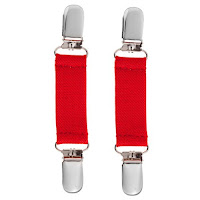
http://amzn.to/1SyFTqPTighten Loose Pants with a Mitten Clip

as referenced in hack #62- Tighten Pants with Elastic.

If you happen to have skinny kids, this might just change you life a little.

Use one mitten clip (Midwesterners- I found a bunch of these at Meijer on winter clearance). Shorter elastics work better than long ones- so go for kids' size. While mitten clips come in a million designs and colors, I have a few solid basics because they were on clearance.


Starting at the side seam on the waistband, place clip around one third of the way between the side and the back seam. Clip the other end on the pants symmetrically on the other side.

Voila. Pants that stay up! Even on skinny kids!

Remember to remove clip before laundering. The one in the picture went through the wash (see the stretching on the left side?).

What have you hacked lately?

*Be my Twitter friend? @babytoolkit 

***Baby Toolkit is the brain dump of some Midwestern parents trying to keep everyone's pants up and shoes tied on life's grand journey. While our babies grew into various sizes of kids, we're still talking about parenting and families. We also podcast about board games and communities at GreatBigTable.com. We're Amazon affiliates, so if you buy anything through our links, a small percentage of you purchase goes to our future adventures!  Many thanks for reading- and a big 5 five for reading the fine print, you're our kind of people!

Friday, February 05, 2010

Dock those tails: Streamlining adjustable elastic pants

Pants handles [pænts hndls] pl n - the flappy bits of buttonhole elastic that stick out of a skinny kid's waistband when the pants are adequately cinched.

When I was a beanpole kid, I spent about 50% of my waking hours hiking my pants up. The other 50% of the time I was wearing highwaters that fit my minimal girth.

I celebrate the advent of pants with adjustable elastic. The only drawback of these brilliant inventions is the extra 4 to 8 inches of elastic that inevitably emerge from the pants waistband like tiny alien arms that sway giddily with every step.

While daydreaming of ways to batten down the tentacles (without cutting them off), I considered adding a second button on each side. At best it sounded labor intensive. At my present speed of mending, I could probably get all Ranger's size 5 pants adjusted by the time he's wearing size 7s.

Then the clouds parted, trumpets blew, and I saw IT. The no-sew, no-fuss solution.

The elastic anchoring hack is so unbelievably obvious that I consulted with other parents to see if I was the only one who hadn't thought of it.

Hang onto your hats, people. You can start docking those pants tails immediately (and humanely).

1) Adjust waist size normally. Secure elastic to button.

2) Take the tail and fold it back toward the button. Find a buttonhole near the dangling end of the tail (or near the center of the tail if it's really long). Loop that buttonhole over the tail.
3) Happy dance (preferably with music) and congratulate yourself on a job well-done.

***Baby Toolkit is an irregular communique from some geek parents notable for both spleen and silly dancing. We gain no profit (beyond bringing cutting edge obviousness to the Internets) from this discussion of fixing fancy pants for the wee-waisted. Photos: Baby Toolkit (c) 2009, some rights reserved.

Tuesday, October 27, 2009

Out D*mn'd Spot: Another Great Stain Fighter

I love shopping second-hand with Mimi-n-Moe's Mom. We were at a rummage sale when she commented on how beautifully stain-free a seller's kids' clothes were. This scored us the best find of the day.

The mom uses Dawn dish washing foam to remove stains. If she cannot hand scrub the stain out with Dawn alone she adds a little baking soda "and that takes out most anything."

While I still often use Dial bar soap for a stain-remover, this is one hot tip. Dawn works quickly, and stains take less time to remove. If using a front loader or other high efficiency washer, wash the Dawn out thoroughly before laundering.

I've tried Dawn and baking soda against some stains that went through the dryer and while it lightened the stains considerably it did not fully remove them. I've placed the articles in direct sunlight to see if the remaining stains fade out, but we haven't had many sunny days lately.

***Baby Toolkit is not affiliated with Dawn nor its parent companies. We aren't laundry professionals though we're well on our way to the 10,000 hours required for mastery. Not to brag, but we seem to be naturally gifted in the field of entropy.

Thursday, August 30, 2007

Snug Little Bugs: Swaddling & Sleep Sacks

When Ranger was a wee newborn we swaddled him for sleep. Initially I couldn't get the hang of it, the blankets just melted off him in the first few minutes. Jim was a natural though, so (being naturally competitive) I kept trying. I found the book Babygami extremely helpful (as well as being beautiful and funny).

Although we had a specialty swaddling blanket, I found it much easier to use a slightly stretchy cotton waffle blanket in the Babygami snug wrap. The specialty straightjacket-style swaddling blanket was hard to adjust for a newborn's small size. When Ranger was big enough to fit the custom swaddler, we were all quite comfortable with blanket swaddling.

Our hands-down favorite blanket for swaddling is the Gerber Thermal receiving blanket. We bought about a dozen of them in various colors (new expecting parents, trust us, bad things happen to blankets faster than you can launder them). They're useful long after the baby outgrows swaddling. We still have everyday uses for them with 2 year-old Ranger.

After swaddling ended (babies get too active to be contained), we moved on to ultra-cozy sleep sacks. Sleep sacks tend to be fleece and run around $20. We weren't going to buy a dozen of these because of cost, bulk, and a very limited period of use. We ended up with around six of them because generous grandparents found them extremely clever. We'd usually put these over a jammies, a onesie, or a baby gown.

Through craftster.org I recently found a good tutorial at Jan Andrea for making sleep sacks. This was really fortuitous as the end user of the girly baby booties I made was recently revealed by ultrasound to be male and I've been looking for a new gift project.

So, meet the Super Sleep Sack. It's for the offspring of an ace graphic designer/illustrator (I won't link because his sitemeter will reveal this page but you can see his blog at jacobelijahwalker.blogspot.com) and an incredibly talented portrait artist/printmaker. I had extra fabric, so I made some no-scratch mitts to spice up the newborn days.

Baby Toolkit is the independent opinion of Adrienne and Jim Jones. We have received no compensation of any kind from anyone affiliated with BabyGami, Gerber, any of the sleep sack companies, Jan Andrea, or Craftster.org. 2007, some rights reserved.

Friday, April 13, 2007

Reincarnation: A Grandma's Wedding Dress Transforms into Twin Christening Gowns

I cannot apologize enough for not having photos of this hack- but I'm having a hard time convincing Mo, the sewing genius behind our Diaper Valet, that it's helpful to take pictures of her freelance work. The wedding dress hack is still great, so we persevere on without visual aids.

A local mom commissioned Mo to transform her mother's wedding gown into two christening gowns for her infant twins. So, one grandma's wedding dress got practical, meaningful reuse regardless of its style, dress size, and (in the case) the gender and marital predilection of her progeny (these were boy/girl twins).

What a great way to use a dress imbued with meaning without forcing the next generation of bride to forgo fit or style. Think of all the saved wedding dresses that never made the cut for a second generation walk down the aisle. They would be great for a project like this.

The wedding gown could also be transformed into a special celebration outfit (birthdays), decor item, or sewn toy for grandchildren. If the dress isn't something that will be worn again, then any reuse you will value and enjoy is fully justifiable.

The wedding dress Mo worked with was a narrow, fitted style, so it was really important that the seamstress measured and planned carefully and cut with great judiciousness in order to get two twin gowns out of the material.

If you are considering the reconfiguration of a wedding dress, I strongly recommend:
  • choosing a seamstress carefully (get recommendations for someone who does tailoring and dressmaking, not just alterations, and don't be afraid to ask to see a sample of their work). This also applies to selecting a seamstress from friends or family or sewing the item yourself. Does the seamstress have a reputation of meeting deadlines and doing consistently high quality work? (I fail on both counts.) If I or my mother sewed anything, it would arrive at least two years over deadline or marginally sewn (which isn't good for an heirloom item).
  • having photos, a sewing pattern, and or drawings to clearly detail the look of the item to be made. This prevents confusion between customer and seamstress.
  • ask questions: end cost, time frame, will additional materials be needed (what will their cost be), are there any additional fees or expenses that might occur (I know of a woman who paid a small fortune for custom window treatments and then was charged a slightly smaller fortune in additional travel fees for measuring the windows and installing the curtains [never mentioned in the initial consultation] by the seamstress).
If you have any odd feelings about the potential seamstress, do not hesitate to ask more questions or keep looking for another candidate as you only have one wedding dress to work with.

We won't be doing this with subsequent GeekBabies for a few reasons.

My moderately unsentimental parents eloped, so my mom's wedding garb of a cotton sundress was discarded long before my adolescence. There wasn't an heirloom dress option in my family.

We ended up getting a satin 1940s vintage wedding dress for $18 at an antique mall for our laid-back, somewhat impromptu outdoor wedding. So I probably wore someone's grandma's dress; I just don't know whose grandma. The material is gorgeous, but it would make a little guy look like a lounge singer, plus, I keep thinking it would make lovely pillowcases (my grandma was a firm believer in the wrinkle-alleviating powers of a quality satin pillowcase- wrinkles or not, they're blissfully cool and comfortable).

Here are a few other tips from Mo on caring for your heirloom clothing items:
  • Have treasured items professionally repaired if they are torn or deteriorating. Amateur repair work might temporarily fix a problem, but it often (think Antiques Roadshow commentary) can cause further damage to the material. Mo did a beautiful restoration of a second-generation christening gown that was torn and unraveling, but due to fabric loss from amateur repairs it required the addition of new materials (hidden to the observer) and hours of careful hand stitching. The dress should last for another generation's use. Please, please, please, don't trust just any dry cleaner or alterations place with heirloom work; some will do the work magnificently, but many will not. It's worth the extra effort (the cost is often the same or less) to find someone who can lovingly restore your heirloom textiles.
  • "No wire hangers.... ever!" It may famously bad parenting, but it is good advice for clothing items that you want to survive in good condition for generations (I doubt it's any big deal for day to day wearables). Mo recommends not using any hangers on any items that you're storing. Delicate fabrics can stretch and discolor on hangers (regardless of type) with prolonged hanging (especially in crowded closets). Padded hangers are better, but not for items that are being stored long-term.
  • Crowded closets make fabrics more prone to wrinkling and deformity. I have read about bachelors pressing their pants between the mattress and box springs, but the same flattening principle doesn't seem to work in closets.
  • Think inside the box if you're storing a special textile, put it folded, but not compressed, in a large acid-free box with tissue paper wrapping.
  • Don't store boxed heirlooms in the attic, garage, or basement (where they will be subject to extremes in humidity, heat, etc.).
  • Plastic is bad for fabrics: dry cleaning bags and other plastic covers do not allow fabric regular air exchange. They allow moisture to collect and promote mildew. Also, plastic bags can be bad for people and pets: In college we used to use plastic trashbags to store off-season clothing items, and then we found out that some plastic trash bags have embedded pesticides (though Glad reports not to use them). It still freaks me out a bit when people store their kids toys in them for attic storage, etc..
So put that gown to use already.

Monday, December 25, 2006

Sound Effects: The Batman Approach to Dressing Your Baby

As soon as BabyGeek started gaining control of his flailing limbs, he became quite helpful in getting dressed. Rather than resisting clothing, he helpfully pushes his little arms and feet into clothing presented to him. Granted, this may be a sign of his dislike for cold air or nakedness, but we prefer to see it as a bi-product of our own silly behavior.

Before he was born, I had never dressed a newborn- or really anyone younger than myself. Come to think of it, I probably hadn't dressed anyone other than myself.

My method of dressing him was to slide my hands through the cuffs of his pants, through the waistband and pull his feet through. A similar method was employed in pulling arms through button-up shirts' sleeves. Onesies and other garments without front openings were befuddling. I would put his head through the large hole and then fish his arms out.

I picked up a habit from my husband of using the comic book phrases that appear on the old Batman episodes whenever his hand, foot, arm, leg, or head appeared through the proper hole.

"BAM!"
"BANG!"
"KA-POW!"
"WHOMP!"
"ZIP!"
"BOOM!"
"WOOSH!"
"ZOOM!"
"POP!"

We steered away from "PLOP!" as it might defeat the success of a recent diaper change.

BabyGeek loves weird sound effect words when they are delivered with gusto. We like to think that his ready participation in wardrobe changes is motivated by our enthusiastic sounds. He also gives a slightly disappointed look when changed by someone not making sounds.

Does this work? Or are we crazy? (not that the two scenarios are mutually exclusive....)

Tuesday, November 14, 2006

These Booties Are Made For Wearing: An Alternative to Supergluing Shoes and Socks


Baby Geek, like most other geeks, can't help but tinker. His status as a baby however, affords him only a limited amount of objects for tinkering. Socks are really ideal because they usually are in close proximity (at least initially) and they have the magical power of being reinstated after being discarded. What perfect objects for manipulation.

With his ongoing fascination with socks and their removal, one would assume that shoes would be even more well-received as they are simply a more advanced version of the same puzzle. Sadly, this was not the case. The first (and last) time we put conventional shoes on Baby Geek, he screamed like animal caught in a trap- a very painful trap with large and pointy teeth. He clawed at his feet and screamed with such a level of duress that our neighbors started piling into their tornado shelters at the sound of his inhuman wail. [No, we were not wearing any hearing protection at the time.] The shoes were a little big and were completely free of the deadly spiders common in our region.

He laid on his belly and wept/screamed even after the offending footwear was removed. This was not a tantrum- it was wholesale terror on his part. As a rare concession, we swore off all footwear for the entire summer (with the rare exception of socks that he would readily dispatch to the Great Lost and Found Box in the Sky).

As the fall weather began to turn cool, I realized that I would have to either wardrobe him entirely in footie jammies, force him to wear socks and shoes, face prosecution for barefoot child neglect, or find some shoes that wouldn't turn him into a wounded creature.

Researching new footwear seemed necessary. I called my dear friend with two older children- each of whom possess a strong will and two feet.
me: "Did your kids like shoes when they were little?"

friend: [good humored laughter]

me: "What did you do?"

friend: "Suffered through with our oldest. For our youngest, my sister-in-law sent me striped slipper socks from Hanna Andersson. He wore them all Fall, Winter, and Spring. They were totally worn out by the time he outgrew them."

Immediately after ending the call, I was googling: Hanna Andersson, "slipper socks," "moccasin socks," "baby moccasins," and so on. It appears the Swedes have know about the magical staying power of slipper socks for generations (but maybe it's no wonder with their cool climate).
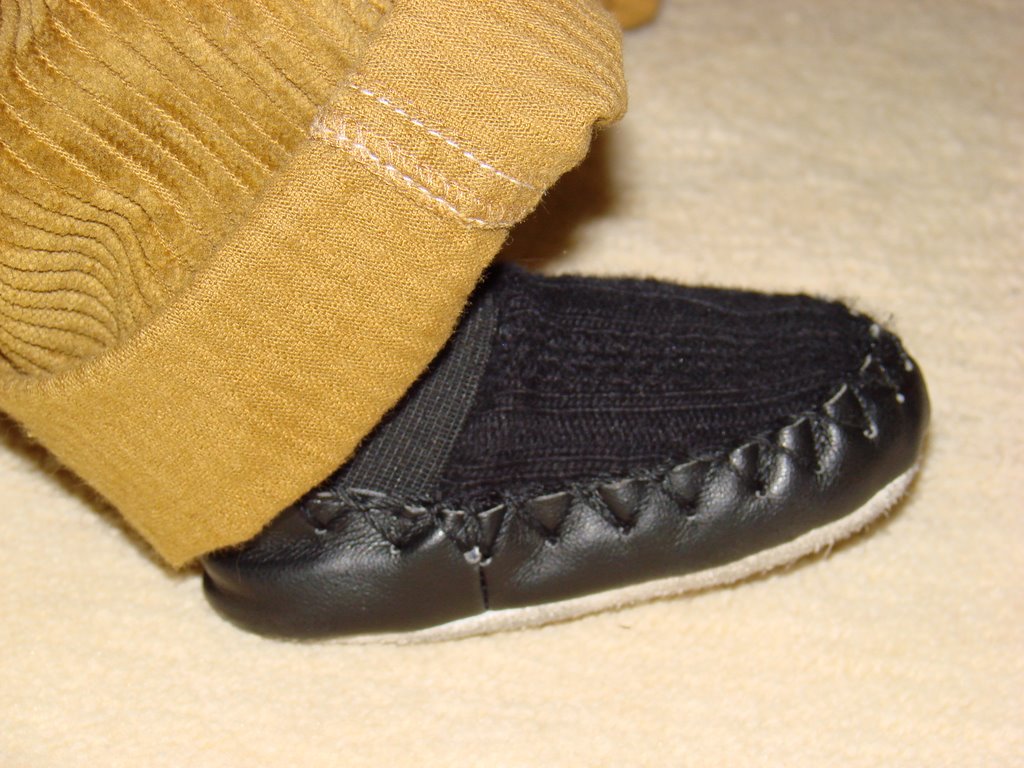
While I liked Hanna Andersson's slippers, I was intruiged by Nowa Li's Cable Knit Moccasin's elastic strap at the ankle ($18.95 + s/h). This baby-removal prevention device seemed promising, maybe too promising to be true.

When the parcel arrived from New Jersey, my older punk-rock brother and his fine friend Brother Hezekiah of punk-bluegrass fusion band Colonel Sander's Grave were over.

"They look like ballet slippers," Uncle Punk smirked.

"My mom used to make me wear Buster Browns in elementary school. Those were worse. Even the nuns made fun of me." [Brother Hezekiah]

Undaunted, I put them on Baby Geek who responded with atypical indifference. He paid them no mind and they ranked as "inoffensive" which is the best one can hope for with toddlers and teenagers.

Baby Geek has worn them almost daily since their arrival. We absolutely adore them and on the days he hasn't worn them he was wearing his Firetruck moccasins (no elastic ankle band, but a stylish pattern and a great clearance price of $9). Nowa Li's flame moccasin might have been the best choice in the eyes of Uncle Punk and Bro. Hezekiah, but alas, they were already sold out.

There really is a substantial mechanical advantage to the elastic banded moccassin. They are more difficult for the baby to remove, although not impossible. The elastic band makes toe-pulling alone completely ineffectual. To remove the moccasin, one must first pull down on the heel before pulling on the toe. This confounds tiny babes and seems like too much trouble for older ones.
The regular slipper sock style moccasins are more easily removed through toe-tugging, but overall, Baby Geek is content to leave them on his feet. Only when he's bored in the car seat or stroller does he remove the regular mocs. He has only removed the cable knit ones twice (most likely to prove it could be done and then prove that the results were replicable).
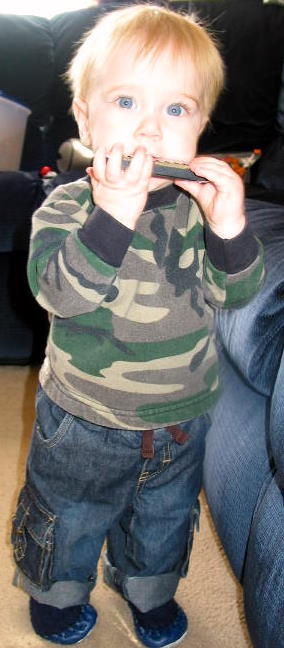
Baby Geek's moccasins have attracted much attention among our friends with infants. More and more of his cohort (like the gorgeous twin pictured in the white and slippers) are now wearing Nowa Li moccasins.

They will be a generation with "ballet slipper" photographs. At least their generation will be able to photoshop in little combat boots when they're older.

Update: 12/4/06
It turns out that Nowa Li manufactures the Hannah Andersson brand slipper socks and moccasins.

In case any adult is jealous of such cozy footwear, Nowa Li offers cable knit moccasins in grown-up sizes (navy or oatmeal).

The sizes run a little large, so we order one size smaller in children's slippers than the size chart suggests. The adult size chart is for men- not women- and it also runs large.